

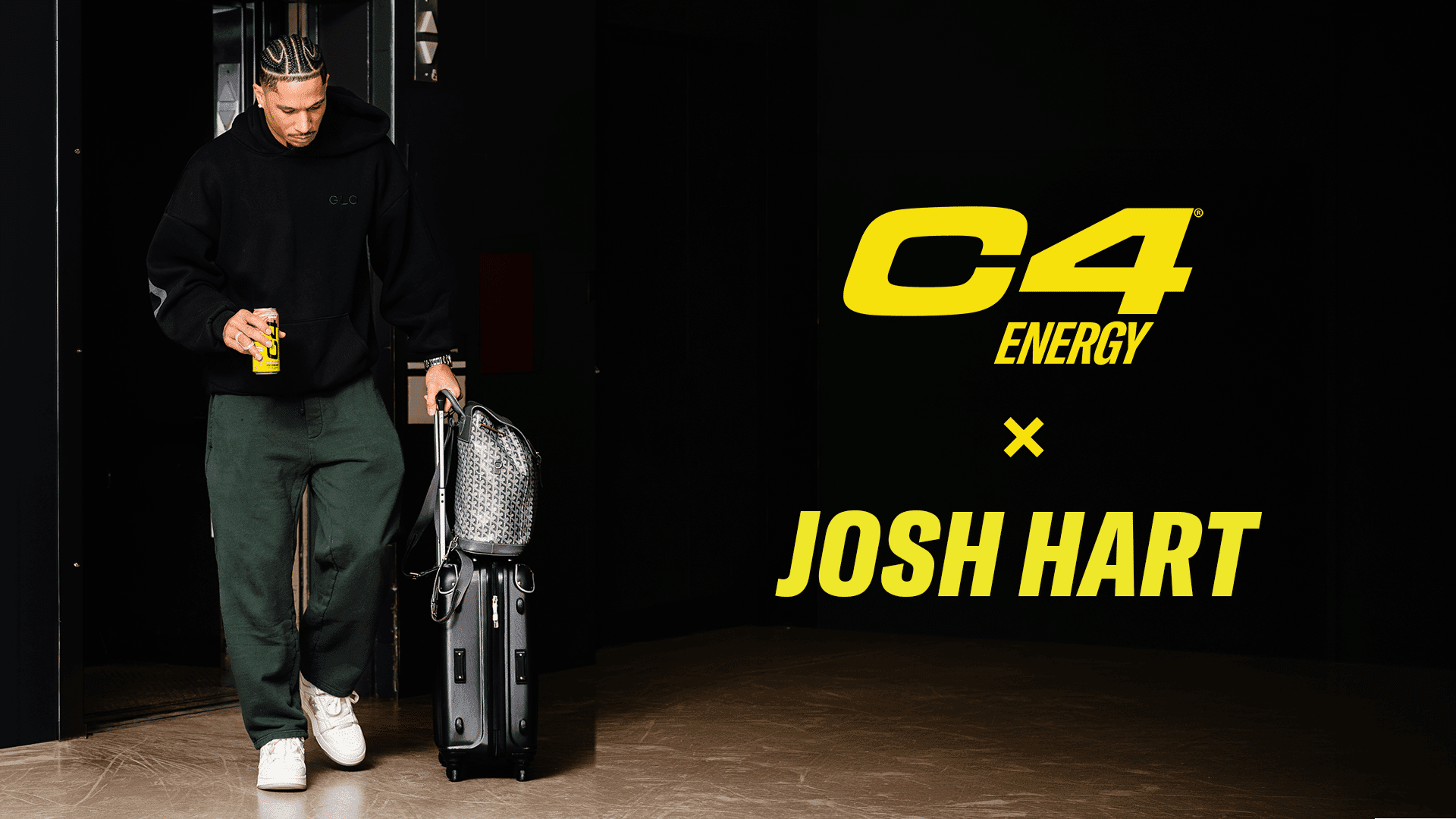
The Josh Hart partnership is one piece of a much larger court strategy from Nutrabolt.
When C4 Energy announced New York Knicks guard Josh Hart as a brand ambassador in March, the headline was the athlete. The more interesting story is what's sitting behind it.
On the same day as the Hart announcement, Nutrabolt CEO Doss Cunningham confirmed on LinkedIn that C4 had also become the official energy drink of the Los Angeles Lakers, adding to existing team partnerships with the Knicks, Celtics, Heat, Canada Basketball, and NBA Europe. That's not influencer marketing. That's a category ownership play. price1
The choice of Hart is deliberate beyond his profile. Hart cited C4's NSF Certified for Sport credentials as a primary reason for the partnership. As a drug-tested professional athlete, third-party certification removes the guesswork from supplement selection entirely. For C4, that's a meaningful commercial signal. NSF certification is expensive and operationally demanding to maintain across a product range. Brands that carry it are making a statement about who their target consumer is. 2
The partnership launch included a pop-up activation at 225 W 34th St, next to Madison Square Garden, featuring product sampling, merchandise customisation, and a meet-and-greet with Hart. The physical activation alongside the ambassador announcement reflects a brand comfortable spending on experiential, not just paid media. 3
The basketball strategy makes sense when you look at where the energy drink category is competing for attention. Celsius Holdings acquired Alani Nu for $1.8 billion in 2025 after the brand delivered $1 billion in net sales, largely through social media and influencer-driven growth. The era of winning purely on digital is compressing. Brands that can build genuine category association with a sport, a team, and a credentialled athlete are creating something harder to replicate than a media budget. 4
The examples stack up quickly once you look. GHOST Energy took official energy drink partnerships with the Chicago Cubs and Philadelphia Phillies, anchoring the brand in baseball before its Keurig Dr Pepper acquisition. Celsius locked in Major League Soccer as its official league partner through 2026, aligning a health-positioned energy drink with a younger, active fanbase rather than chasing the NFL or NBA where it would compete with deeper-pocketed incumbents. G Fuel built its entire brand inside the gaming community by supporting FaZe Clan from 2012, years before esports had mainstream commercial attention. 5
The pattern scales down too. GateDrop, a New Hampshire energy gummy brand founded in 2024, launched by embedding directly into the motocross community, signing Supercross athlete Carter Biese as its first pro rider and building a sponsorship model that reinvests product revenue back into the athletes who represent it. No national retail, no major media buy. Just a founders-who-ride-themselves story told in exactly the right room. 6
CWENCH did it through grassroots hockey. C4 is doing it through professional basketball. G Fuel did it through gaming. GateDrop is doing it through motocross. The mechanism is different every time. The logic is the same: own a community before you ask it to buy something.