

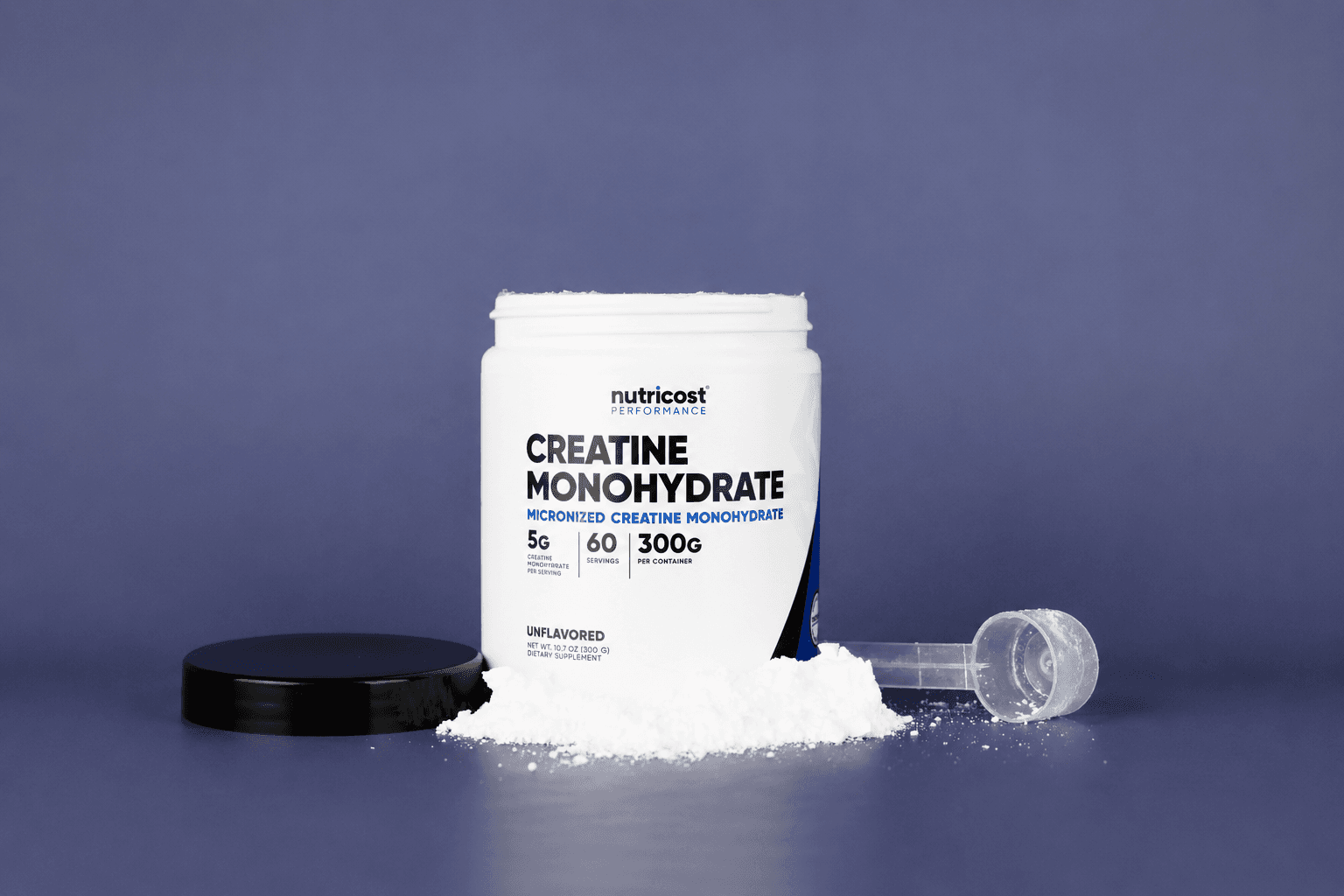
For most of its commercial life, creatine monohydrate lived in one place — the supplement aisle of a specialty fitness retailer, shelved next to protein powder and pre-workout, bought by people who already knew what it was and why they wanted it. The price was the point. Five grams a day, as cheap as possible, repeat purchase every few months. Nutricost, BulkSupplements, Optimum Nutrition, and a handful of others built real volume businesses on exactly that transaction.
That market still exists. On Amazon and in specialty retail, creatine monohydrate is effectively a commodity. Nutricost holds the volume position with a product that tests at or above label claim, carries third-party certification, and comes in at around $0.23 per serving. BulkSupplements competes on the same terms at scale. Optimum Nutrition, one of the most recognised names in sports nutrition for thirty years, prices within reach of both. The ingredient is identical across all of them. The science behind it has been settled for decades. In a category where the molecule itself cannot be differentiated, price becomes the primary lever and that race, at the value end, is largely run.
What's changed is who's buying creatine, and where.
The supplement has moved steadily out of specialty fitness retail and into pharmacy chains, mainstream grocery, and direct-to-consumer wellness brands. The buyer in those channels is not the same person who was cross-referencing serving costs on Amazon. They're coming to creatine through a different door — a doctor's recommendation, a longevity podcast, a women's health publication covering muscle preservation after 40. The European Food Safety Authority has formally recognised creatine's contribution to normal energy metabolism and muscle function. Brands like Thorne and Momentous have launched products positioned specifically around cognitive performance and age-related muscle maintenance, sold through channels where the fitness supplement aesthetic would be a liability.
That shift is where the premium tier has found its footing. Creapure, the German-certified creatine produced by AlzChem, has been the reference standard for certified-purity creatine for over two decades. It carries third-party verification, a traceable origin, and a contaminant profile that meets EFSA limits for compounds like DCD and DHT that appear at higher levels in standard grades. Momentous uses it as a sourcing credential. The price per serving reflects it. That buyer, older and wellness-oriented, purchasing from a DTC brand or a pharmacy shelf, is not comparing Momentous to Nutricost. The frame is entirely different.
The premium argument in this channel isn't purely technical. It's about what the product signals in a context where the person buying it has never thought of themselves as a supplement user. A $45 tub with pharmaceutical-grade sourcing language and clean packaging sells a different story than a $20 tub with a barbell on the label, even if the molecule inside is functionally the same.
Format has followed the buyer too, though not always cleanly. Gummies had a significant moment — SPINS reported 52% year-on-year sales volume growth at their peak — driven by the same convenience logic that has reshaped vitamins and omega-3s. The problem is that creatine is chemically unstable in a water-based format. When creatine is mixed with water during the gummy manufacturing process, it can degrade into creatinine, a waste product that delivers none of the performance benefit. In 2024, supplement manufacturer NOW Foods tested 12 creatine gummy brands purchased from Amazon and found that six failed to meet their label claims. A subsequent 2025 investigation by health technology company SuppCo tested six top-selling creatine gummies and found four contained no meaningful creatine at all. Some products with Amazon ratings between 4.4 and 4.7 stars were delivering a fraction of a percent of the stated dose. The testing also revealed a secondary problem: at the time of NOW's investigation, none of the reputable third-party labs they typically used had validated methods for testing gummies, meaning the quality failure had gone largely undetected.
The chew format has fared better on stability, and brands developing in that space have been more deliberate about third-party verification. But the gummy episode illustrated something important about what happens when a category grows faster than the quality infrastructure around it.
At the volume end, in specialty retail and on Amazon, the brands that win are the ones that have made peace with the commodity reality and competed on price and verified quality. In pharmacy and DTC wellness, creatine is being introduced to a buyer who has never thought of it as their supplement, and that buyer is being sold something closer to a health decision than a sports purchase.